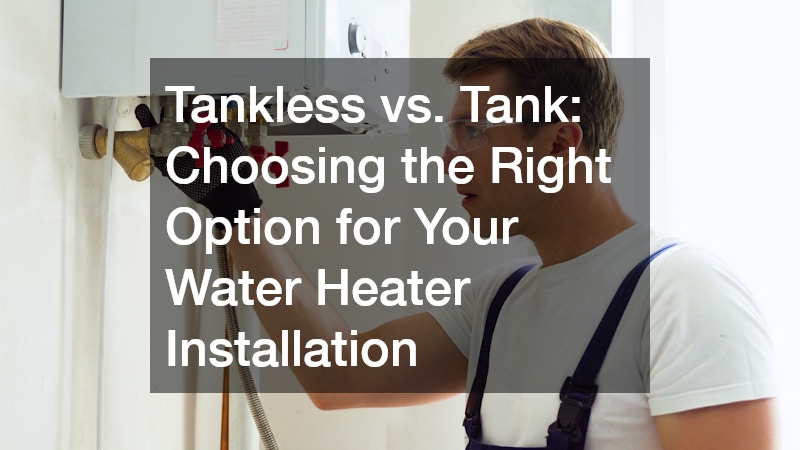
Few household appliances are as essential as your hot water system. When replacing an aging unit, choosing between a storage tank and a tankless model is a major decision. Planning a new water heater installation requires balancing upfront costs, long-term efficiency, and household demand. Understanding how these technologies function helps you make an informed investment that keeps your showers warm.
Traditional water heaters rely on an insulated storage reservoir to heat and hold water continuously. In contrast, tankless units heat water on demand by passing it through heating elements when a faucet opens. Both options offer unique advantages depending on your budget, space restrictions, and personal energy goals. Exploring these fundamental differences is the best way to determine which system fits your home.
Evaluating Initial Costs and Long-Term Savings
Financial considerations play a major role when choosing between these two plumbing systems. The initial cost of a traditional water heater installation remains much lower than that of an on-demand unit. Conventional tank units are inexpensive to purchase, and replacing an existing tank involves straightforward labor. However, holding hot water at a constant temperature leads to higher ongoing energy bills over time.
Tankless units require a significantly higher initial investment due to advanced heating technology. Upgrading to a tankless setup often necessitates gas line expansion, electrical service panel upgrades, or new venting systems. Over time, however, on-demand heating uses significantly less energy because it completely eliminates standby heat loss. These operational savings can eventually offset the higher initial price tag over the system’s extended lifespan.
Comparing Space Requirements and Household Footprints
Physical footprint is another vital factor that influences equipment selection during a home renovation project. Conventional storage tanks occupy a substantial amount of floor space in basements or garages. These heavy, bulky cylinders usually hold 30 to 80 gallons, restricting storage space for other items. For homes with tight utility areas, managing a large tank can prove remarkably challenging.
Tankless systems are remarkably compact and mount directly onto a wall to free up floor space. These sleek units are roughly the size of a small suitcase, making them perfect for smaller homes. Retrofitting your utility space for a tankless water heater installation requires careful consideration of structural placement and venting. Reclaiming valuable floor space is often a primary motivation for homeowners making the switch.
Analyzing Hot Water Capacity and Daily Performance
Understanding daily consumption habits ensures that your chosen unit can handle peak usage periods reliably. Storage tank systems supply a rapid flow of hot water from their pre-heated reservoir until emptied. Once depleted, the unit requires 30 minutes to an hour to reheat a fresh batch of water. Evaluating these flow rate demands before committing to a specific water heater installation option prevents unexpected icy showers.
Tankless systems provide a continuous stream of hot water that theoretically never runs out during single-point usage. However, these units are limited by their total gallons-per-minute output capacity during simultaneous heavy demands. Running a dishwasher, washing machine, and shower at once can overwhelm a single unit and lower water temperature. Larger households may need multiple tankless units installed in parallel to handle simultaneous demand.
Understanding Maintenance Demands and System Lifespans
Long-term durability and regular upkeep routines vary dramatically between storage tanks and wall-mounted systems. Traditional tank units generally last between eight and twelve years before corrosion compromises the steel shell. Regular maintenance involves flushing sediment buildup annually and replacing sacrificial anode rods. Once a tank begins to leak, total replacement is the only viable remedy to prevent water damage.
Tankless models boast an impressive lifespan, frequently lasting 20 years or longer with proper care. These units require periodic descaling to clear mineral deposits, especially in areas with hard water. Component replacement is much simpler on tankless systems because individual electronic parts can be swapped easily. Investing in regular servicing ensures that high-tech units operate reliably across their extended lifespan.
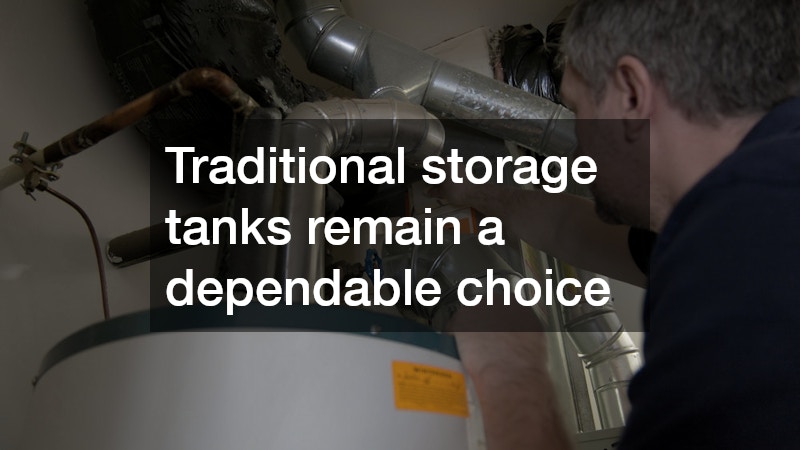
Selecting the right heating system comes down to prioritizing your budget, spatial availability, and performance expectations. Traditional storage tanks remain a dependable choice for homeowners seeking lower upfront replacement costs. Tankless models represent a forward-looking investment that delivers superior energy efficiency, space savings, and endless hot water. Weighing these practical factors helps you choose the technology that best matches your long-term needs.
Whichever system you choose, working with qualified professionals is essential to guarantee safe operation and code compliance. Expert technicians can accurately calculate household load requirements and ensure proper ventilation, gas lines, and electrical connections. Scheduling your professional water heater installation ensures reliable comfort and protects your property from potential hazards. Take the time to consult with an experienced installer to enjoy consistent hot water for years to come.