Keeping a home comfortable throughout the year involves much more than changing the thermostat whenever the temperature outside rises or falls. Indoor comfort depends on how effectively your equipment operates, how easily conditioned air moves throughout the house, and how well the building prevents unwanted heat transfer.
When one part of this equation is not working properly, homeowners may notice rooms that are consistently warmer or colder than others, unusually long equipment cycles, rising utility bills, weak airflow, or difficulty maintaining the desired indoor temperature. These symptoms do not always mean the main equipment needs to be replaced. Something as straightforward as a clogged filter, blocked return vent, air leak, or poor thermostat strategy can sometimes have a significant effect.
The best approach is to look at the home as a complete system. Regular maintenance, proper airflow, insulation, equipment condition, and everyday operating habits all contribute to comfort and efficiency. By addressing each of these areas systematically, homeowners can reduce unnecessary energy use while creating more consistent indoor temperatures.
Here are several practical ways to improve year-round comfort and make better decisions about maintaining, repairing, and eventually replacing important home equipment.
Schedule Preventive Maintenance Before Peak Seasons
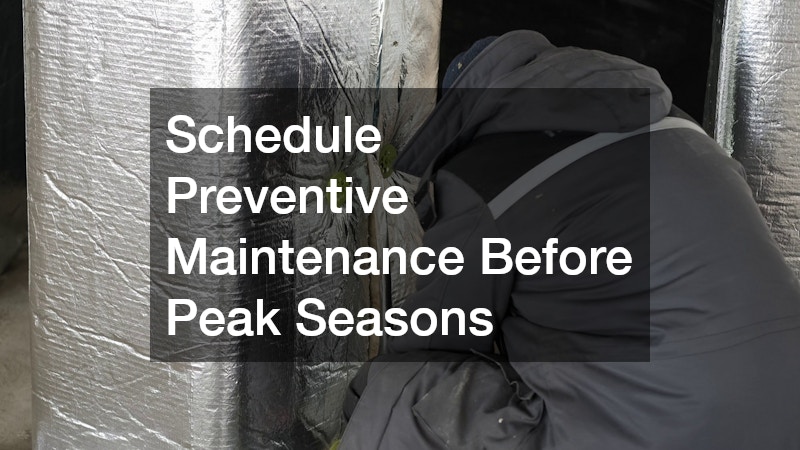
Waiting for equipment to stop working is rarely the most convenient approach to home comfort. Breakdowns often become noticeable during periods of extreme weather, precisely when the equipment is working hardest and service professionals may be busiest.
Scheduling an air conditioning service before the hottest part of the year gives a technician an opportunity to inspect the equipment under less urgent circumstances. Depending on the type of system, professional maintenance may involve examining electrical connections, checking operating temperatures and airflow, inspecting accessible components, cleaning appropriate parts, and looking for indications of developing problems.
The same preventive approach applies throughout the rest of the year. A routine HVAC Service can identify components showing wear before they contribute to a larger failure. Maintenance also provides an opportunity to determine whether unusual noises, longer operating cycles, or inconsistent temperatures are signs of an actual equipment problem.
Homeowners can perform some routine tasks between professional appointments. Check the filter regularly and replace or clean it according to the equipment manufacturer’s instructions. Homes with pets, renovation dust, or other sources of airborne particles may require more frequent attention.
Keep outdoor equipment free from leaves, vegetation, and other obstructions as well. Indoor supply and return vents should remain unobstructed so air can circulate properly.
Finally, maintain a simple service history. Recording maintenance dates, repairs, and recurring symptoms makes it easier to identify patterns and evaluate whether older equipment is becoming increasingly expensive to maintain.
Improve Airflow Before Changing the Thermostat
When a room feels uncomfortable, the instinctive response is often to adjust the thermostat. If poor airflow is causing the problem, however, changing the temperature setting may simply make equipment operate longer without addressing the underlying issue.
Begin with accessible areas of the home. Make sure supply registers are open and are not covered by furniture, rugs, curtains, or stored belongings. Return vents also need sufficient clearance because the system must be able to pull air back through the house to operate effectively.
A dirty filter can create another restriction. As debris accumulates, equipment may have to work harder to move air. Follow the manufacturer’s recommendations regarding the correct filter type and replacement schedule rather than automatically selecting the most restrictive filter available.
During the heating season, pay attention to differences between rooms. If one room remains noticeably colder despite open vents, repeatedly raising the temperature setting may increase energy consumption without solving the problem. Duct leakage, insulation deficiencies, airflow imbalance, or equipment issues could be responsible.
Persistent problems can also indicate that heating repairs are needed. Warning signs may include unusual mechanical sounds, unexpected odors, frequent cycling, weak airflow, or equipment that operates for long periods without bringing the home to the desired temperature.
Avoid guessing at the cause when symptoms continue. A professional evaluation can help determine whether the problem involves equipment, ductwork, controls, or another part of the home. Correcting the actual restriction or malfunction is generally more useful than continuously compensating for it with thermostat adjustments.
Reduce Heat Loss and Keep Conditioned Air Indoors
Even well-maintained equipment will struggle to keep a house comfortable if conditioned air continually escapes or outdoor temperatures easily penetrate the building envelope.
Start by examining common areas for air leakage. Worn weatherstripping around exterior doors, visible gaps around windows, and openings around certain utility penetrations can allow unwanted air movement. Appropriate sealing can help reduce these losses.
The attic deserves particular attention because insulation and air sealing can significantly influence temperature control. Insulation levels should be appropriate for the home’s climate and construction. Because insulation requirements and installation methods vary, homeowners considering major improvements may benefit from a professional energy assessment.
Rooms with persistent temperature problems also deserve closer investigation. An addition, finished attic, converted garage, or other space constructed differently from the main house may have needs that the original equipment was never designed to handle.
In some situations, a mini split can provide targeted temperature control without requiring an extension of existing ductwork. However, adding equipment should not be the first response to every uncomfortable room. Air leaks, insulation deficiencies, solar heat gain, or duct problems should be investigated first.
Before making a major change, ask an experienced HVAC company to evaluate the home’s actual requirements. Proper equipment selection involves factors such as square footage, insulation, windows, orientation, local climate, and existing equipment.
Oversized equipment is not automatically better. Correct sizing and a clear understanding of the underlying comfort problem are more important than simply choosing the largest available unit.
Evaluate Older Equipment Before Repair Costs Add Up

Mechanical equipment does not last indefinitely. As major components age, homeowners may eventually have to decide whether another repair makes financial sense or whether replacement would provide better long-term value.
Start by considering the complete history of the equipment. Age is important, but it should not be the only factor. Frequency of repairs, operating costs, reliability, comfort performance, and the availability of replacement parts can all influence the decision.
For homes using a boiler system, warning signs can include recurring leaks, unusual noises, inconsistent temperatures, unreliable operation, or increasingly frequent service calls. Because these systems can involve combustion, pressure, venting, electrical components, and hot water, potentially serious problems should be evaluated by a qualified professional.
When boiler repair is recommended, request a clear explanation of what failed and why. Ask whether the problem is isolated or whether other major components are showing significant wear. A written estimate can help you compare the cost of the proposed work against replacement alternatives.
One expensive repair does not automatically mean equipment should be replaced. Conversely, repeatedly spending money on an unreliable older unit can become expensive over time.
Consider expected remaining service life and future maintenance needs alongside the immediate repair bill. If replacement is being considered, compare efficiency, warranties, installation requirements, and expected operating costs rather than focusing solely on the purchase price.
The objective is not necessarily to keep old equipment operating as long as physically possible. It is to choose the option that provides dependable comfort, reasonable operating costs, and acceptable reliability.
Make Hot Water Part of Your Efficiency Plan
Space conditioning receives much of the attention when homeowners think about energy use, but producing hot water is another important part of household comfort and operating expenses.
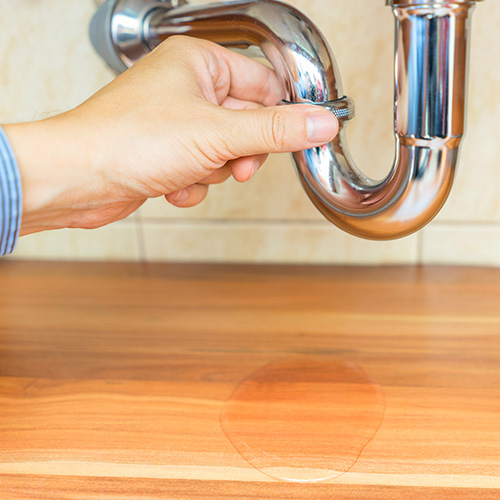
Pay attention to changes in water-heating performance. Inconsistent temperatures, reduced hot-water availability, leaks, unusual sounds, or visible deterioration can indicate that equipment needs professional attention. Water appearing around the unit deserves prompt investigation rather than being ignored.
When planning a water heater install, proper sizing should be one of the first considerations. Equipment that cannot meet normal household demand can create frustration, while selecting a system without considering actual usage may lead to unnecessary costs.
Compare more than the initial purchase price. Fuel type, efficiency, household demand, installation requirements, maintenance needs, and expected service life can all affect long-term value. The best choice for a small household may differ considerably from what works for a larger family with significant simultaneous hot-water demand.
Fuel planning matters in homes that depend on delivered energy. Establishing a reliable relationship with a heating oil provider and understanding delivery schedules can help reduce the risk of running unexpectedly low during periods of heavy use. Homeowners may also want to understand whether automatic delivery or monitoring options are available.
Review consumption patterns periodically. An unexplained increase in energy use can sometimes indicate an equipment problem or a change elsewhere in the household.
Thinking about hot water as part of the home’s broader energy strategy can provide a more accurate picture of operating expenses and opportunities for improvement.
Use Your Thermostat and Equipment More Strategically
Thermostats provide important control over indoor comfort, but they cannot correct mechanical problems or building deficiencies. Using them strategically can reduce unnecessary operation while maintaining reasonable temperatures.
Programmable and smart controls can be useful when household schedules are predictable. Instead of maintaining the same temperature around the clock, homeowners may be able to adjust settings during certain periods when the house is unoccupied or occupants are sleeping.
Avoid extreme adjustments. Setting the thermostat dramatically higher usually does not make most conventional heating equipment warm the home faster. Instead, it can cause the equipment to operate longer and potentially overshoot the temperature you actually wanted.
Choose setbacks appropriate for your particular equipment and household. Some systems respond differently to large temperature changes, so manufacturer guidance or professional recommendations can be helpful.
Pay attention to how the system behaves after a thermostat adjustment. If temperatures respond predictably, the controls are probably doing their job. If equipment runs continuously, cycles unusually often, or cannot reach the selected temperature, simply changing the setting again may not solve the problem.
A professional HVAC Service can help determine whether the issue involves the thermostat, controls, airflow, or equipment itself. Likewise, unusually poor heating performance should be investigated rather than continually compensated for with higher settings.
The thermostat should function as a control, not as a workaround for unresolved mechanical or building problems.
Know When Professional Help Is the Safer Choice
Homeowners can handle several useful maintenance tasks themselves. Replacing accessible filters, keeping vents clear, removing debris around outdoor equipment, and monitoring system performance can all contribute to reliable operation.
Other tasks require specialized training and equipment. Electrical repairs, refrigerant-related work, combustion problems, major component replacement, and equipment installation should generally be left to qualified professionals.
Certain warning signs should receive prompt attention. Burning odors, persistent leaks, repeated equipment shutdowns, unusual mechanical noises, or suspected combustion problems can indicate conditions that should not be treated as routine do-it-yourself projects. Follow appropriate emergency and manufacturer guidance when an immediate safety concern exists.
When selecting an HVAC company, ask about licensing requirements applicable in your area, insurance, warranties, and the scope of the proposed work. For major repairs or replacement, request a written estimate explaining what is included.
Homes with a boiler system require particular care because troubleshooting may involve fuel, combustion, venting, pressure, water, and electrical controls. Professional diagnosis can help identify the source of a problem instead of replacing components based on guesswork.
Ask questions before approving expensive work. A reputable professional should be able to explain what is wrong, what corrective action is recommended, and why.
Knowing the limits of do-it-yourself maintenance protects both the homeowner and the equipment. Professional assistance is especially valuable when the work involves safety-critical components or problems that repeatedly return after basic maintenance.
Create a Long-Term Plan for Better Home Comfort

Improving indoor comfort does not usually depend on one major upgrade. The most effective approach combines preventive maintenance, good airflow, appropriate insulation, sensible thermostat use, and equipment that is properly selected for the home’s needs.
Begin with simple observations. Notice which rooms are uncomfortable, when problems occur, whether utility use has changed, and whether equipment behaves differently than it did previously. These details can help identify issues before they become major failures.
Maintain filters and accessible components, keep vents unobstructed, address obvious air leaks, and schedule professional inspections at appropriate intervals. When repairs become frequent, evaluate the long-term costs instead of automatically approving another temporary fix.
Most importantly, consider the entire house when investigating comfort problems. A cold bedroom does not necessarily mean the primary equipment is failing, and a warm upstairs room does not automatically require additional equipment. Airflow, insulation, windows, ductwork, controls, and building design can all contribute.
A proactive approach makes it easier to prioritize improvements based on actual needs. By maintaining equipment carefully and addressing small performance problems early, homeowners can work toward more consistent temperatures, dependable operation, and better energy efficiency throughout every season.